
A Sermon Devotional · St. Mark's
I Am the Way,
the Truth, the Life
A reflection on John 14:1–14
Begin
A Sermon Devotional · St. Mark's
A reflection on John 14:1–14
Thomas said to him, “Lord, we do not know where you are going. How can we know the way?” Jesus said to him, “I am the way, and the truth, and the life. No one comes to the Father except through me.”
John 14:5–6Last week he was the gate to the sheepfold. This time it’s the way, the truth, the life. None of it makes sense at first glance.
Thomas has this reputation for being a doubter. But really, he’s asking the questions any regular person would ask. How are we supposed to know the way when we don’t even know the destination? Thomas didn’t even have an address to type into GPS, let alone a map that showed the whole way.
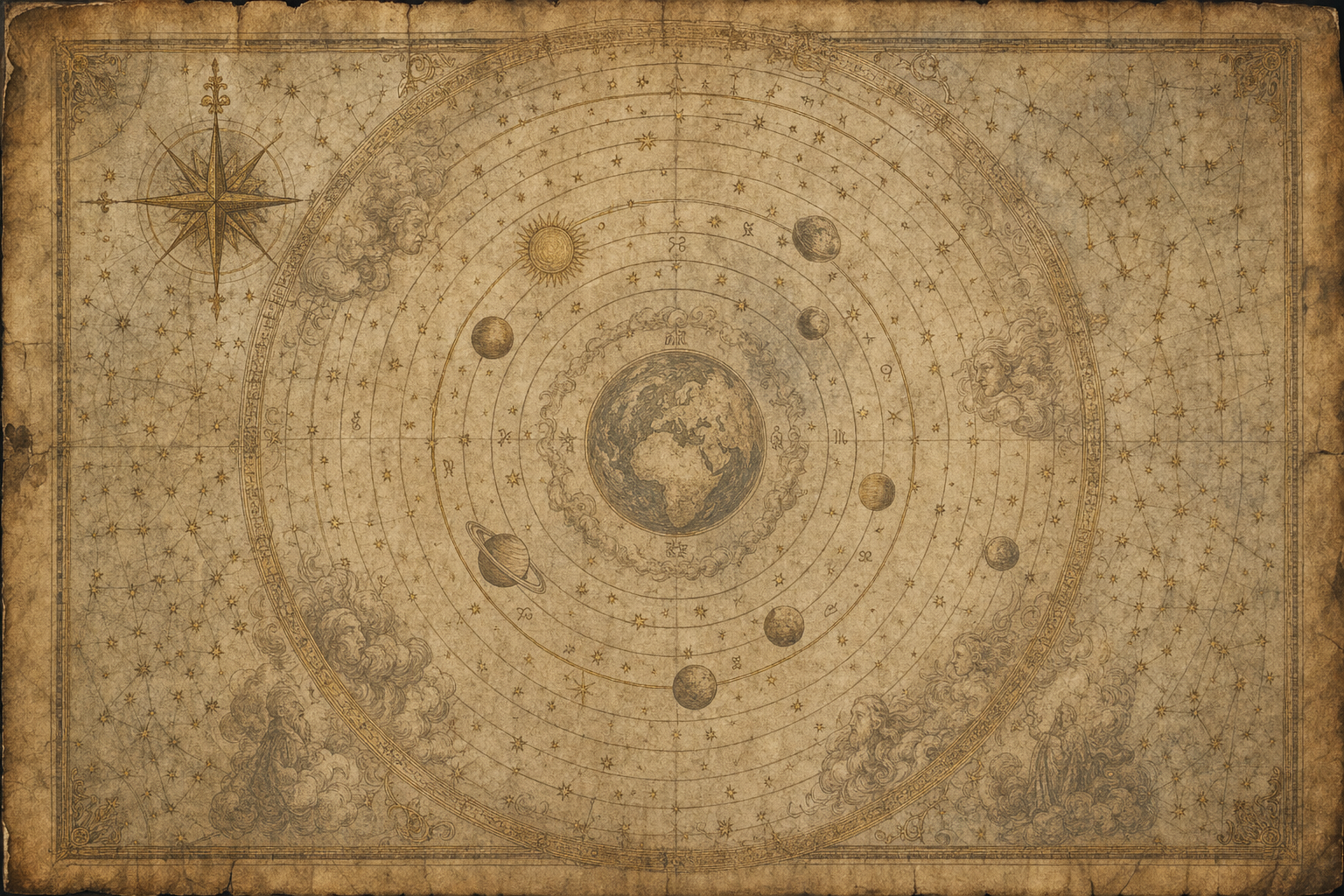
A map cannot literally show every footstep on the path. There are compromises in detail, distortions in flattening a round world onto a page. If a map were drawn one-to-one with the world, you couldn’t even unfold it — let alone use it to plan the journey.
He asked his question in fear of the future, fear of not knowing what to do, and ultimately the fear of being left alone. That’s what the disciples were worried about — that Jesus was talking about leaving.
They didn’t know where he was going. They didn’t know how to proceed. They thought they would lose their connection to God without him. We can read Thomas with compassion, with solidarity — because we’ve asked the same thing.
Whoever has seen me has seen the Father.

The Great Holy Mystery
Jesus being in the Father, and the Father being in Jesus. Somehow God became human — entering all the fears, uncertainties, and struggles of being human. God doesn’t pat us on the head like toddlers and say “how cute.” God is in full solidarity with humanity. That union is the way.
Thomas and Philip and all the disciples don’t have to worry about being by themselves. By themselves they are weak — they can’t stand against the evils of the world, the oppression of empire and war, the dangers of poverty and disease.
What is a human in the face of pain and death? What future can we hope for? How are we supposed to make our way? Jesus has shown us the way. Jesus is the way — the way to the Father, the way to union between divine and human.

A song by Pete Seeger · words by Lee Hays
Tomorrow is a highway broad and fair, and we are the many who will travel there. We are the many who will build it there. Come, let us build a way for all mankind, a way to leave these evil years behind. To travel onward to a better year, where love is, and there will be no fear.
Not alone. Together, in union, in solidarity with each other. We can’t lose the way, because we’re building it together — a highway to a future where there is no fear.
No fear of being alone. No fear of getting lost. No fear of losing the way. By ourselves, we make maps and give directions, but they will always be feeble models that don’t capture the truth of things. Jesus isn’t a map that compromises on detail to fit a page.
The way, the truth, the life. Union with God. No compromises, no distortions — God in complete solidarity with us. That’s the way. Jesus is the way that we are supposed to be.
Amen.
John 14:1–14 · Preached at St. Mark's
May I speak to you in the name of the Father and the Son and the Holy Spirit. Amen.
Thomas said to him, “Lord, we do not know where you are going. How can we know the way?” Jesus said to him, “I am the way and the truth and the life. No one comes to the Father except through me. If you know me, you will know my Father also. From now on, you do know him and have seen him.”
Here we go again with Jesus saying inscrutable things. Last week he said he was the gate to the sheepfold. This time it’s the way, the truth, the life. None of it makes sense at first glance. Thomas has this reputation for being a doubter. But for real, he’s asking the questions any regular person would ask. How are we supposed to know the way when we don’t even know the destination? Thomas didn’t even have an address to type into GPS, let alone a map that showed the whole map.
My living room is decorated with maps. I have a map made from satellite pictures of the world at night, coastlines outlined by the cities, but mostly everything is dark. Some of my maps are stylized with plants native to the area. Some are historical, like my hometown 100 years ago. I even have a medieval map of the solar system from when people thought the earth was at the center. All of these maps are conveying some information.
But all maps are necessarily simplified from reality. I mean, if I had a map that was one-to-one scale, I wouldn’t even be able to unfold it, let alone use it to help me plan a road trip. A map cannot literally show every footstep on the path. There are compromises on the level of detail that can be shown. There are distortions in making a model of a three-dimensional world on a piece of paper or even on a GPS screen.
Thomas is right. How can the disciples know the way when they don’t even know where they’re going? That’s not how maps work. That’s not how directions work.
But I think Thomas was asking a question not because he was being contrary and catching Jesus in a linguistic slip, but in fear. Thomas was asking this question — how can we know the way — in his fear of the future, his fear of not knowing what to do, and ultimately his fear of being left alone.
That’s what the disciples were worried about, that Jesus was talking about leaving. They didn’t know where he was going. They didn’t know how to proceed. They thought that they would lose their connection to God without him.
Sometimes I think Jesus might have gotten annoyed at the disciples when they continually miss the point and fail to understand what he’s saying. But I can also read this passage with compassion, with solidarity.
Jesus said to him, “Have I been with you all this time, Philip, and you still do not know me? Whoever has seen me has seen the Father. Believe me that I am in the Father and the Father is in me.”
That kind of union — Jesus being in the Father and the Father being in Jesus — that’s the great holy mystery. Somehow there is union between divine and human. Somehow God became human. All the fears, uncertainties, struggles of being human. God doesn’t pat us on the head like we’re toddlers and say, “how cute.” God doesn’t just send messenger angels or words thundering from the sky. The words that Jesus says are from the Father who dwells in him.
God is in full solidarity with humanity. Jesus is in the Father and the Father is in Jesus. That’s true union. That’s true solidarity.
Thomas and Philip and all the disciples don’t have to worry about being alone by themselves. They might be weak. By themselves, they can’t stand and face the evils of the world, the oppression of empire and war, the dangers of poverty and disease.
What is a human in the face of pain and death? What sort of future can they hope for? How are they supposed to make their way? Jesus has shown us the way. Jesus is the way. Jesus is in the Father and the Father is in Jesus. Union with God. That is the way.
Jesus couldn’t give the disciples a map or turn-by-turn directions. Jesus, in his union with God, is the way. The way to the Father, the way to union between divine and human. Humans are not supposed to be alone. How can we be alone? God is in solidarity with us. Solidarity so much that God actually became human. And that union of divine and human is the way.
But it all sounds so abstract. Not like a good map that gets you through a journey. Not like practical turn-by-turn GPS directions. Thomas’s question still rings true. Lord, we do not know where you are going. How can we know the way?
There’s this Pete Seeger song, “Tomorrow Is a Highway.” The words are by Lee Hays. Tomorrow is a highway broad and fair, and we are the many who will travel there. We are the many who will build it there. Come, let us build a way for all mankind, a way to leave these evil years behind. To travel onward to a better year, where love is and there will be no fear. Where love is and no fear.
Tomorrow is a highway. It makes about as much sense at first glance as Jesus saying, “I am the way, the truth, and the life.” But that’s it, isn’t it? Tomorrow is a highway, and we are the many who will build it — not alone, together in union, in solidarity with each other. Come, let us build a way for all mankind where love is and there will be no fear. No fear of being alone, no fear of getting lost, no fear of losing the way. We can’t lose the way because we’re building it together. The highway to a future where there’s no fear, to a future where love is, where we are in solidarity and union with each other in that mysterious and holy way, where God is in union and solidarity with us forever.
Lord, we do not know where you are going. How can we know the way? We know the way because we know Jesus. We can’t lose the way because Jesus, in his union with God, is the way. Tomorrow is a highway broad and fair, and we are the many who will build it there. Come, let us build a way for all mankind, where love is, and there will be no fear.
Maybe by ourselves, humans can’t find our way. We make maps, give directions, but they’re always going to be feeble models that don’t really capture the truth of things. But Jesus isn’t just a map that compromises on details in order to fit on a page.
Jesus is the completely true-to-life way. The way, the truth, the life. Union with God. No compromises, no distortions. God in complete solidarity with us. That’s the way. Jesus is the way that we are supposed to be. Amen.
Come to the Table
“I am the living bread that came down from heaven.”
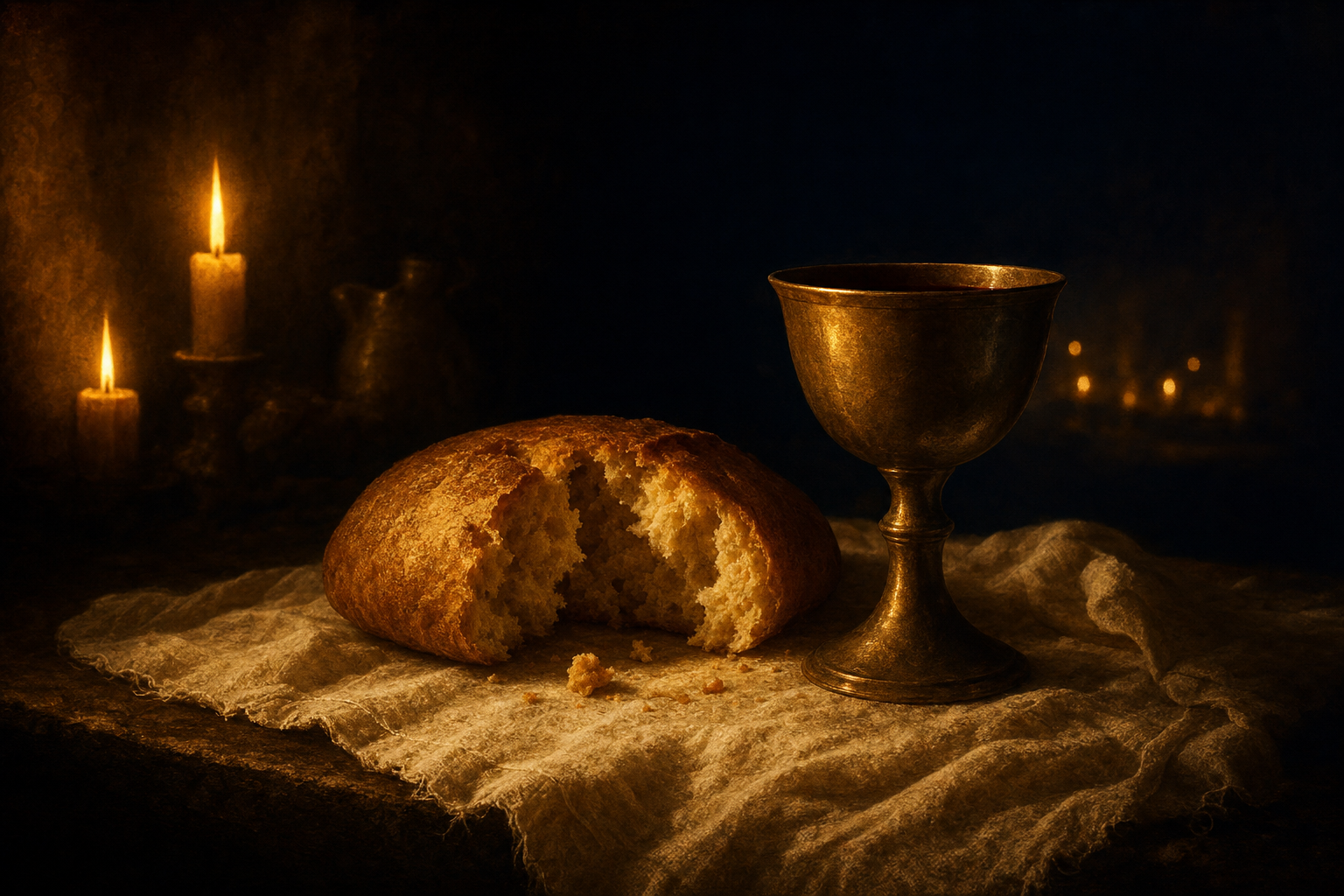
Here the great mystery becomes a meal. At this table, God’s solidarity with us is not abstract — it is bread broken and a cup poured out. The way is not a map we study alone, but a table we approach together. Come, take, and remember: you are not alone, and you cannot lose the way.
All who seek Christ are welcome to receive. Come and be drawn into the union of the divine and the human — and walk on in the way of love, where there is no fear.
John 6:51 · The Holy Eucharist